Buy destiny-2000.com ?
We are moving the project
destiny-2000.com .
Are you interested in purchasing the domain
destiny-2000.com ?
domain@kv-gmbh.de · 0541-91531010
Buy destiny-2000.com ?
What is the wave-particle duality?
Wave-particle duality is a fundamental concept in quantum mechanics that states that particles, such as electrons and photons, can exhibit both wave-like and particle-like behavior. This means that they can behave as waves, with characteristics such as interference and diffraction, and also as particles, with characteristics such as position and momentum. This duality challenges our classical understanding of particles and waves as distinct entities, and is a key aspect of understanding the behavior of matter and energy at the quantum level. **
Does the human have particle and wave characteristics?
Yes, humans and all matter have both particle and wave characteristics. This is known as wave-particle duality, a fundamental concept in quantum mechanics. At the quantum level, particles such as electrons and photons can exhibit wave-like behavior, as demonstrated by phenomena like diffraction and interference. This duality is a key aspect of the behavior of matter and energy at the smallest scales of the universe. **


Similar search terms for Wave-particle
Top-Angebote
Products related to Wave-particle:
-
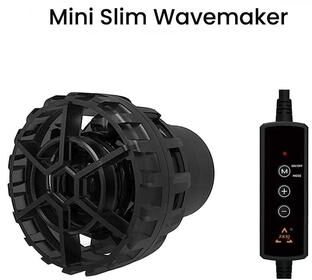
Uplift Essentials Third Generation Ultra Compact Mini Aquarium Wave Maker mini Slim 2000Achieve professionalgrade water circulation with this ultracompact aquarium wave maker, designed to be powerful yet nearly invisible in your tank. Measuring barely 1.5 inches long, this pump easily hides anywhere in your aquarium while utilizing...115,97 $*Shipping: 0,00 $Secure redirect to the provider



-
Do all quantum objects obey the wave-particle duality?
Yes, all quantum objects exhibit wave-particle duality, which means they can exhibit both wave-like and particle-like behavior. This duality is a fundamental aspect of quantum mechanics and is observed in phenomena such as the double-slit experiment, where particles exhibit interference patterns characteristic of waves. This duality is a key feature of quantum theory and is essential for understanding the behavior of quantum objects. **
-
What is the difference between the wave model and the particle model?
The wave model describes light as a wave that travels through space, exhibiting properties like interference and diffraction. In contrast, the particle model views light as a stream of particles called photons that carry energy and momentum. The wave model explains phenomena like interference patterns and polarization, while the particle model helps to understand effects like the photoelectric effect and Compton scattering. Both models are used in different contexts to describe the behavior of light. **
-
In which year and with which experiment was the wave-particle duality proven?
The wave-particle duality was proven in 1927 through the famous double-slit experiment conducted by physicist Thomas Young. This experiment demonstrated that light exhibits both wave-like and particle-like properties, leading to the development of the concept of wave-particle duality in quantum mechanics. **
-
What is the difference between the wave and the particle model of light?
The wave model of light describes light as a continuous wave with properties such as wavelength, frequency, and amplitude. This model explains phenomena such as interference and diffraction. On the other hand, the particle model of light, also known as the photon model, describes light as a stream of discrete particles called photons. This model explains phenomena such as the photoelectric effect and the emission of light from atoms. The wave model is more suitable for explaining the behavior of light in certain situations, while the particle model is more suitable for explaining other phenomena. **


How can one imagine a photon within the framework of wave-particle duality?
Within the framework of wave-particle duality, a photon can be imagined as both a wave and a particle simultaneously. As a wave, it exhibits properties such as interference and diffraction, similar to other waves. As a particle, it carries discrete packets of energy and momentum, and can interact with matter as a discrete entity. This duality means that a photon's behavior is best described by both wave and particle characteristics, and it can exhibit wave-like behavior in some situations and particle-like behavior in others. This dual nature of a photon is a fundamental aspect of quantum mechanics. **
Light is neither a particle nor a wave, but depending on the experiment it exhibits properties of either a wave or a particle. But what it really is, we do not know.
Light is a complex phenomenon that exhibits both wave-like and particle-like properties. In some experiments, it behaves like a wave, showing interference and diffraction patterns, while in others, it behaves like a particle, interacting with matter in discrete packets of energy called photons. The true nature of light remains a mystery, and it is described by the wave-particle duality principle in quantum mechanics. **
Top-Angebote
Products related to Wave-particle:
-
Inspired Finds ZKSJ Mini Aquarium Wave Maker Slim Circulation Pump With 3 Wave Patterns mini Slim 2000 (usb)Keep your aquatic environment healthy and vibrant. The aquarium wave maker pump by ZKSJ is designed to simulate natural water movement, improving circulation and oxygen levels in your tank. With three customizable wave patterns, this slim, compact...115,99 $*Shipping: 0,00 $Secure redirect to the provider
-
Uplift Essentials Colorful Solar Particle Ball Wind Chime Light Colorful Solar Particle Ball Wind Chime LightElevate your outdoor environment with a highperformance lighting solution that masterfully blends auditory charm with vibrant visual artistry. This colorful solar particle ball wind chime light is the ultimate solution for homeowners and decorators...58,97 $*Shipping: 0,00 $Secure redirect to the provider
-
What is the wave-particle duality?
Wave-particle duality is a fundamental concept in quantum mechanics that states that particles, such as electrons and photons, can exhibit both wave-like and particle-like behavior. This means that they can behave as waves, with characteristics such as interference and diffraction, and also as particles, with characteristics such as position and momentum. This duality challenges our classical understanding of particles and waves as distinct entities, and is a key aspect of understanding the behavior of matter and energy at the quantum level. **
-
Does the human have particle and wave characteristics?
Yes, humans and all matter have both particle and wave characteristics. This is known as wave-particle duality, a fundamental concept in quantum mechanics. At the quantum level, particles such as electrons and photons can exhibit wave-like behavior, as demonstrated by phenomena like diffraction and interference. This duality is a key aspect of the behavior of matter and energy at the smallest scales of the universe. **
-
Do all quantum objects obey the wave-particle duality?
Yes, all quantum objects exhibit wave-particle duality, which means they can exhibit both wave-like and particle-like behavior. This duality is a fundamental aspect of quantum mechanics and is observed in phenomena such as the double-slit experiment, where particles exhibit interference patterns characteristic of waves. This duality is a key feature of quantum theory and is essential for understanding the behavior of quantum objects. **
-
What is the difference between the wave model and the particle model?
The wave model describes light as a wave that travels through space, exhibiting properties like interference and diffraction. In contrast, the particle model views light as a stream of particles called photons that carry energy and momentum. The wave model explains phenomena like interference patterns and polarization, while the particle model helps to understand effects like the photoelectric effect and Compton scattering. Both models are used in different contexts to describe the behavior of light. **
Similar search terms for Wave-particle
-
Uplift Essentials Third Generation Ultra Compact Mini Aquarium Wave Maker mini Slim 2000Achieve professionalgrade water circulation with this ultracompact aquarium wave maker, designed to be powerful yet nearly invisible in your tank. Measuring barely 1.5 inches long, this pump easily hides anywhere in your aquarium while utilizing...115,97 $*Shipping: 0,00 $Secure redirect to the provider
-
John Murray Opportunity: Seize the Day, Win at Life by Rob Moore – Success & Mindset GuideAre you waiting for that once-in-a-lifetime opportunity to change your life, change your business or change the world? How will you know when it comes? How will you be sure you're ready? This book is not about waiting for an opportunity that might never come. It's a book for right now containing mployed right away, and will ensure that you attract opportunities, whether big or small, all the time. Successful people are sometimes lucky - but most of all they find success because they have trained their minds to identify great opportunities and make the most of them when they arrive, rather than freezing with uncertainty or lacking the vision to see them through. In this book Rob Moore, the bestselling author of MONEY, START NOW. GET PERFECT LATER and I'M WORTH MORE shows you how to elevate your emotional intelligence and decision making to ensure that when opportunity strikes you are ready to take advantage, seize the day, and win at life. When Opportunity knocks, you'll be ready.4,99 £*Shipping: 1,99 £Secure redirect to the provider
-
In which year and with which experiment was the wave-particle duality proven?
The wave-particle duality was proven in 1927 through the famous double-slit experiment conducted by physicist Thomas Young. This experiment demonstrated that light exhibits both wave-like and particle-like properties, leading to the development of the concept of wave-particle duality in quantum mechanics. **
-
What is the difference between the wave and the particle model of light?
The wave model of light describes light as a continuous wave with properties such as wavelength, frequency, and amplitude. This model explains phenomena such as interference and diffraction. On the other hand, the particle model of light, also known as the photon model, describes light as a stream of discrete particles called photons. This model explains phenomena such as the photoelectric effect and the emission of light from atoms. The wave model is more suitable for explaining the behavior of light in certain situations, while the particle model is more suitable for explaining other phenomena. **
-
How can one imagine a photon within the framework of wave-particle duality?
Within the framework of wave-particle duality, a photon can be imagined as both a wave and a particle simultaneously. As a wave, it exhibits properties such as interference and diffraction, similar to other waves. As a particle, it carries discrete packets of energy and momentum, and can interact with matter as a discrete entity. This duality means that a photon's behavior is best described by both wave and particle characteristics, and it can exhibit wave-like behavior in some situations and particle-like behavior in others. This dual nature of a photon is a fundamental aspect of quantum mechanics. **
-
Light is neither a particle nor a wave, but depending on the experiment it exhibits properties of either a wave or a particle. But what it really is, we do not know.
Light is a complex phenomenon that exhibits both wave-like and particle-like properties. In some experiments, it behaves like a wave, showing interference and diffraction patterns, while in others, it behaves like a particle, interacting with matter in discrete packets of energy called photons. The true nature of light remains a mystery, and it is described by the wave-particle duality principle in quantum mechanics. **
* All prices are inclusive of VAT and, if applicable, plus shipping costs. The offer information is based on the details provided by the respective shop and is updated through automated processes. Real-time updates do not occur, so deviations can occur in individual cases. ** Note: Parts of this content were created by AI.