Buy destiny-2000.com ?
We are moving the project
destiny-2000.com .
Are you interested in purchasing the domain
destiny-2000.com ?
domain@kv-gmbh.de · 0541-91531010
Buy destiny-2000.com ?
Are punctuation marks and emojis analogous?
Punctuation marks and emojis serve different purposes in written communication. Punctuation marks are used to clarify the structure and meaning of a sentence, while emojis are used to convey emotions, tone, and nonverbal cues. While both can enhance written communication, they are not entirely analogous as they serve different functions. Emojis are more akin to nonverbal cues in face-to-face communication, while punctuation marks are more about organizing and clarifying written text. **
Are Maybugs analogous or homologous animals?
Maybugs, also known as cockchafers, are not analogous or homologous to any other animals. They are a unique species of beetle belonging to the family Scarabaeidae. Analogous structures are similar in function but not in structure or evolutionary origin, while homologous structures are similar in structure and evolutionary origin but not necessarily in function. Maybugs do not share these similarities with any other animals, making them a distinct and separate species. **

Similar search terms for Analogous
Top-Angebote
Products related to Analogous:
-
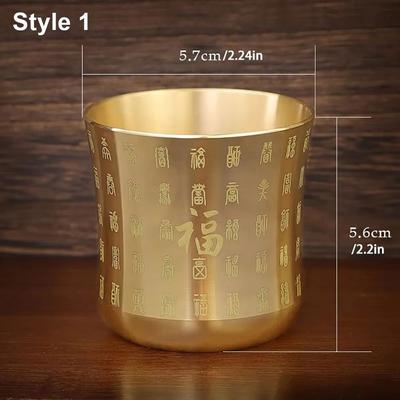
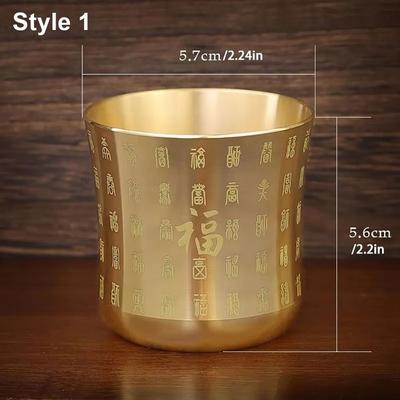
Uplift Essentials Wealth Attracting Brass Tea Cup 2.4 In Polished Baifu Cornucopia High Yield Prosperity Interaction Hub style 1Achieve metaphysical optimization with this Precision Brass Auspicious Mug. Specifically engineered for abundance transparency, this highperformance technical tool acts as a vital tool for manifestation efficiency, neutralizing the limitations of...35,97 $*Shipping: 0,00 $Secure redirect to the provider
-
John Murray Rob Moore 3 Book Set – I’m Worth More, Start Now Get Perfect Later & Opportunity Success CollectionI'm Worth More In this fascinating, liberating book bestselling author Rob Moore takes you back to basics and examines how to realize your real value - your self-esteem, your ambitions, your reputation and your income. No longer will you doubt yourself, make self-defeating comparisons or make assumptions about how others see you - instead you will maximize your opportunities and love yourself for who you really are. Start Now. Get Perfect Later Hardly anyone gets it right the first time, but many of us are crippled by indecision and fear of failure. The desire to get it right can inhibit us from getting started. In this book Rob Moore, the bestselling author of MONEY, shows that the quickest way to perfect is starting right now and improving as you go. This book will show you how to launch your business or idea, begin the next phase of your career, and overcome self-doubt - right away. Get perfect later, get started NOW. Opportunity: Seize The Day. Win At Life This book is not about waiting for an opportunity that might never come. It's a book for right now containing ideas and strategies that can be employed right away, and will ensure that you attract opportunities, whether big or small, all the time.Successful people are sometimes lucky - but most of all they find success because they have trained their minds to identify great opportunities and make the most of them when they arrive, rather than freezing with uncertainty or lacking the vision to see them through.12,99 £*Shipping: 2,99 £Secure redirect to the provider
-
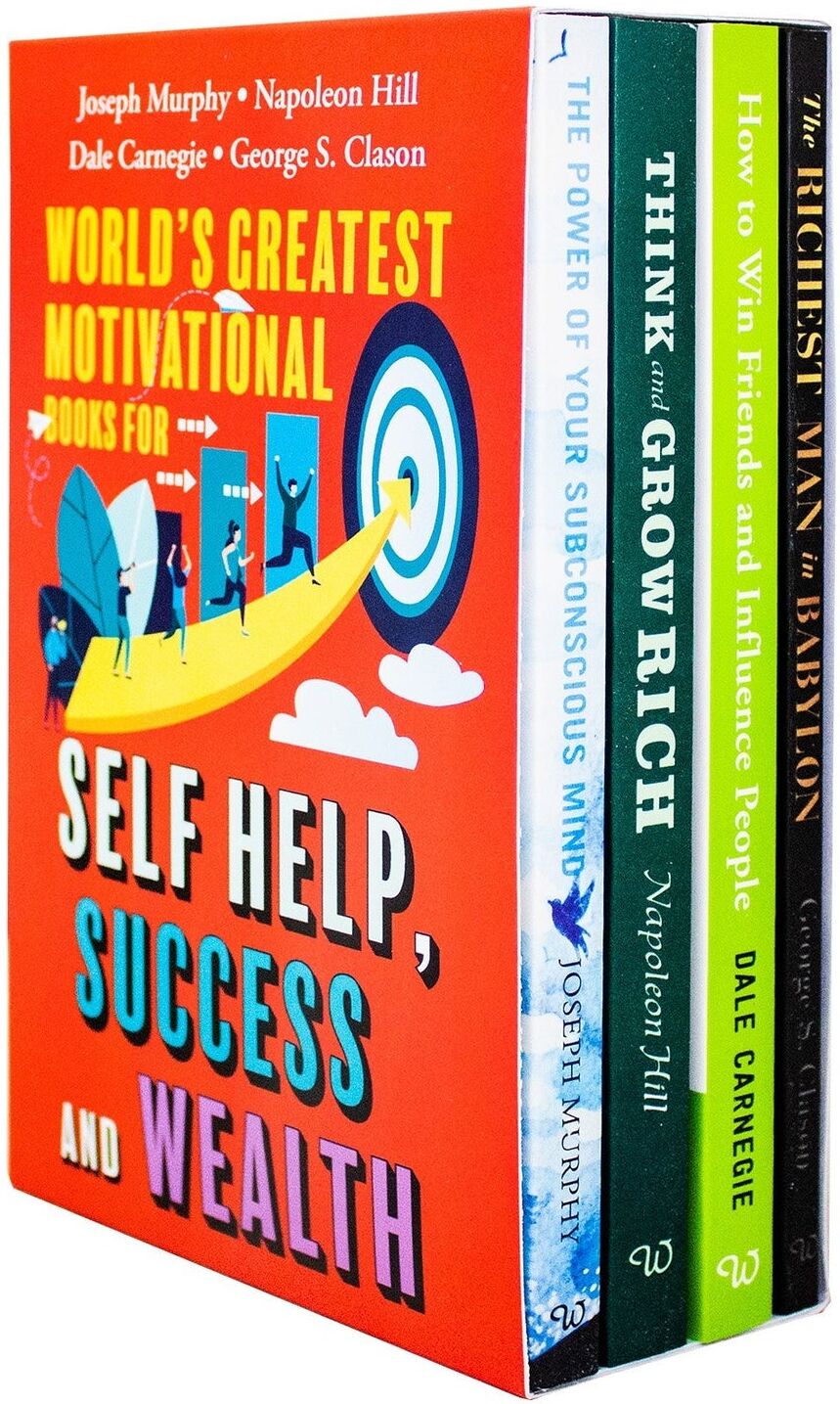
Wilco International LLP Worlds Greatest Motivational Books for Self Help, Success and Wealth 4 Books Collection SetTitles in this set: Think and Grow Rich The Richest Man in Babylon The Power of your Subconscious Mind How to Win Friends & Influence People A collection of world's timeless classics, this box set includes the four greatest bestsellers, which have inspired readers for generations. Packed with wisdom and time-tested principles that are as relevant in modern times as ever before, these inspirational books are a must-read for all those aspiring for personal growth and wealth.9,95 £*Shipping: 2,99 £Secure redirect to the provider
-
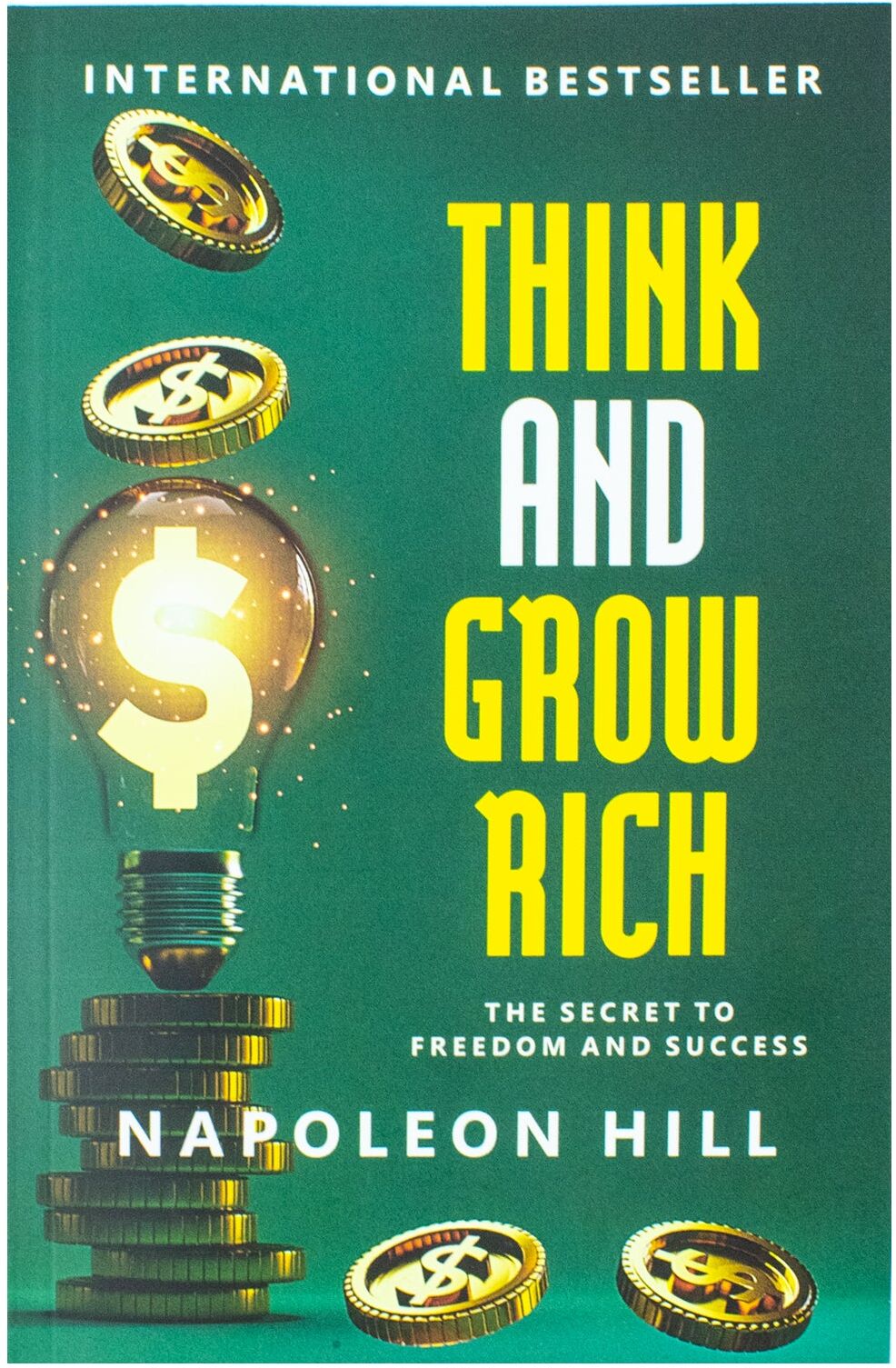
Wilco Publishing Think and Grow Rich by Napoleon Hill Classic Personal Development, Success, Wealth, Mindset & Motivation Self Help BookDiscover one of the most influential personal development classics with Think and Grow Rich by Napoleon Hill. Originally published in 1937, Think and Grow Rich explores the principles and habits Hill associated with achievement, ambition, persistence, goal setting and personal success. Rather than focusing solely on money, the book examines how mindset, clear goals, determination and consistent action can influence progress towards personal and professional ambitions. Hill presents principles intended to help readers develop greater focus, confidence and persistence when pursuing their goals. A longstanding classic in the fields of self-help, motivation, business and personal development, Think and Grow Rich remains popular with entrepreneurs, professionals and readers interested in improving their approach to achievement and success. Whether you're building a personal development library, looking for motivational reading or searching for a gift for an aspiring entrepreneur, this enduring classic is an excellent choice. Key Features Classic personal development book by Napoleon Hill Focuses on success, mindset and goal setting Explores motivation, persistence and achievement Popular with entrepreneurs and business readers Ideal for self-improvement and motivational reading Timeless addition to a personal development library Great gift for business and self-help readers2,99 £*Shipping: 1,99 £Secure redirect to the provider

-
Are bat wings homologous or analogous?
Bat wings are homologous structures, meaning they share a common evolutionary origin with the wings of other mammals, such as humans and whales. This suggests that bats, humans, and whales all inherited their limb structure from a common ancestor. In contrast, analogous structures are those that have similar functions but different evolutionary origins, such as the wings of birds and insects. **
-
Are mole and mole cricket analogous or homologous?
Mole and mole cricket are analogous structures because they have similar functions (burrowing underground) but do not share a common evolutionary origin. Mole is a mammal, while mole cricket is an insect, so they are not homologous structures. Analogous structures evolve independently in different species to serve the same purpose, while homologous structures are inherited from a common ancestor. **
-
What are homologous and analogous structures in plants?
Homologous structures in plants are features that have a similar underlying structure and origin, but may have different functions. For example, the wings of a bird and the arms of a human are homologous structures because they both have a similar bone structure, even though they serve different purposes. In plants, homologous structures can include similar leaf or flower structures that have evolved from a common ancestor. Analogous structures in plants, on the other hand, are features that have a similar function but different underlying structures and origins. For example, the wings of a bird and the wings of a butterfly are analogous structures because they both serve the function of flight, but have different anatomical origins. In plants, analogous structures can include similar leaf shapes or reproductive structures that have evolved independently in different plant lineages to serve similar functions. **
-
What is the difference between equivalent and analogous?
The main difference between equivalent and analogous is that equivalent refers to things that are equal in value, function, or meaning, while analogous refers to things that are similar in some way but not necessarily equal in value or function. For example, two equivalent fractions have the same value, while two analogous situations may share similarities but have different outcomes. In summary, equivalent implies equality, while analogous implies similarity. **

Are spines and thorns in biology homologous or analogous?
Spines and thorns in biology are considered analogous structures. This means that they have similar functions (protection) but do not share a common evolutionary origin. Spines can be found in a variety of organisms, such as cacti and porcupines, while thorns are typically found in plants like roses and blackberries. Despite their similar functions, spines and thorns evolved independently in different lineages to serve the purpose of defense. **
What is the definition of homologous and analogous organs?
Homologous organs are structures that have a similar origin in different species, suggesting a common evolutionary ancestor. These organs may have different functions in different species but share a common underlying structure. On the other hand, analogous organs are structures that have a similar function in different species but do not share a common evolutionary origin. Analogous organs have evolved independently in different species to serve the same purpose. **
Top-Angebote
Products related to Analogous:
-
John Murray Opportunity: Seize the Day, Win at Life by Rob Moore – Success & Mindset GuideAre you waiting for that once-in-a-lifetime opportunity to change your life, change your business or change the world? How will you know when it comes? How will you be sure you're ready? This book is not about waiting for an opportunity that might never come. It's a book for right now containing mployed right away, and will ensure that you attract opportunities, whether big or small, all the time. Successful people are sometimes lucky - but most of all they find success because they have trained their minds to identify great opportunities and make the most of them when they arrive, rather than freezing with uncertainty or lacking the vision to see them through. In this book Rob Moore, the bestselling author of MONEY, START NOW. GET PERFECT LATER and I'M WORTH MORE shows you how to elevate your emotional intelligence and decision making to ensure that when opportunity strikes you are ready to take advantage, seize the day, and win at life. When Opportunity knocks, you'll be ready.4,99 £*Shipping: 1,99 £Secure redirect to the provider
-
Inspired Living Auspicious Wealth Brass Tea Cup Feng Shui Cornucopia Baifu Mug For Prosperity & Home Decor 1Let every sip invite abundance into your life. This beautifully crafted Feng Shui tea cup is more than drinkwareits a symbol of prosperity, designed for those who value intention and tradition. Made from polished brass with intricate Baifu (Hundred...28,97 $*Shipping: 0,00 $Secure redirect to the provider
-
Uplift Essentials Wealth Attracting Brass Tea Cup 2.4 In Polished Baifu Cornucopia High Yield Prosperity Interaction Hub style 1Achieve metaphysical optimization with this Precision Brass Auspicious Mug. Specifically engineered for abundance transparency, this highperformance technical tool acts as a vital tool for manifestation efficiency, neutralizing the limitations of...35,97 $*Shipping: 0,00 $Secure redirect to the provider
-
John Murray Rob Moore 3 Book Set – I’m Worth More, Start Now Get Perfect Later & Opportunity Success CollectionI'm Worth More In this fascinating, liberating book bestselling author Rob Moore takes you back to basics and examines how to realize your real value - your self-esteem, your ambitions, your reputation and your income. No longer will you doubt yourself, make self-defeating comparisons or make assumptions about how others see you - instead you will maximize your opportunities and love yourself for who you really are. Start Now. Get Perfect Later Hardly anyone gets it right the first time, but many of us are crippled by indecision and fear of failure. The desire to get it right can inhibit us from getting started. In this book Rob Moore, the bestselling author of MONEY, shows that the quickest way to perfect is starting right now and improving as you go. This book will show you how to launch your business or idea, begin the next phase of your career, and overcome self-doubt - right away. Get perfect later, get started NOW. Opportunity: Seize The Day. Win At Life This book is not about waiting for an opportunity that might never come. It's a book for right now containing ideas and strategies that can be employed right away, and will ensure that you attract opportunities, whether big or small, all the time.Successful people are sometimes lucky - but most of all they find success because they have trained their minds to identify great opportunities and make the most of them when they arrive, rather than freezing with uncertainty or lacking the vision to see them through.12,99 £*Shipping: 2,99 £Secure redirect to the provider
-
Are punctuation marks and emojis analogous?
Punctuation marks and emojis serve different purposes in written communication. Punctuation marks are used to clarify the structure and meaning of a sentence, while emojis are used to convey emotions, tone, and nonverbal cues. While both can enhance written communication, they are not entirely analogous as they serve different functions. Emojis are more akin to nonverbal cues in face-to-face communication, while punctuation marks are more about organizing and clarifying written text. **
-
Are Maybugs analogous or homologous animals?
Maybugs, also known as cockchafers, are not analogous or homologous to any other animals. They are a unique species of beetle belonging to the family Scarabaeidae. Analogous structures are similar in function but not in structure or evolutionary origin, while homologous structures are similar in structure and evolutionary origin but not necessarily in function. Maybugs do not share these similarities with any other animals, making them a distinct and separate species. **
-
Are bat wings homologous or analogous?
Bat wings are homologous structures, meaning they share a common evolutionary origin with the wings of other mammals, such as humans and whales. This suggests that bats, humans, and whales all inherited their limb structure from a common ancestor. In contrast, analogous structures are those that have similar functions but different evolutionary origins, such as the wings of birds and insects. **
-
Are mole and mole cricket analogous or homologous?
Mole and mole cricket are analogous structures because they have similar functions (burrowing underground) but do not share a common evolutionary origin. Mole is a mammal, while mole cricket is an insect, so they are not homologous structures. Analogous structures evolve independently in different species to serve the same purpose, while homologous structures are inherited from a common ancestor. **
Similar search terms for Analogous
-
Wilco International LLP Worlds Greatest Motivational Books for Self Help, Success and Wealth 4 Books Collection SetTitles in this set: Think and Grow Rich The Richest Man in Babylon The Power of your Subconscious Mind How to Win Friends & Influence People A collection of world's timeless classics, this box set includes the four greatest bestsellers, which have inspired readers for generations. Packed with wisdom and time-tested principles that are as relevant in modern times as ever before, these inspirational books are a must-read for all those aspiring for personal growth and wealth.9,95 £*Shipping: 2,99 £Secure redirect to the provider
-
Wilco Publishing Think and Grow Rich by Napoleon Hill Classic Personal Development, Success, Wealth, Mindset & Motivation Self Help BookDiscover one of the most influential personal development classics with Think and Grow Rich by Napoleon Hill. Originally published in 1937, Think and Grow Rich explores the principles and habits Hill associated with achievement, ambition, persistence, goal setting and personal success. Rather than focusing solely on money, the book examines how mindset, clear goals, determination and consistent action can influence progress towards personal and professional ambitions. Hill presents principles intended to help readers develop greater focus, confidence and persistence when pursuing their goals. A longstanding classic in the fields of self-help, motivation, business and personal development, Think and Grow Rich remains popular with entrepreneurs, professionals and readers interested in improving their approach to achievement and success. Whether you're building a personal development library, looking for motivational reading or searching for a gift for an aspiring entrepreneur, this enduring classic is an excellent choice. Key Features Classic personal development book by Napoleon Hill Focuses on success, mindset and goal setting Explores motivation, persistence and achievement Popular with entrepreneurs and business readers Ideal for self-improvement and motivational reading Timeless addition to a personal development library Great gift for business and self-help readers2,99 £*Shipping: 1,99 £Secure redirect to the provider
-
John Murray You Are a Badass at Making Money by Jen Sincero – Master the Mindset of Wealth & Financial SuccessYou Are a Badass at Making Money: Master the Mindset of Wealth (you are a badass book) Description From the author of You Are A Badass; the New Your Times bestselling book everyone is talking about. YOU ARE A BADASS AT MAKING MONEY is the book you need if you've spent too much time watching money land in your bank account and then roll through your fingers. Jen Sincero went from living in a converted garage to traveling the world in 5-star luxury in a matter of years; and knows all too well the layers of BS one can get wrapped up in around money; as well as what it takes to dig your way out. In this funny; fascinating and practical book she goes in-depth on how powerful our thoughts are and how our bank accounts are mirrors for our beliefs about money. YOU ARE A BADASS AT MAKING MONEY combines laugh out loud comedy with life-changing concepts; all boiled down into manageable; bite-sized tips so that YOU can put them into practice and get life changing results.2,95 £*Shipping: 1,99 £Secure redirect to the provider
-
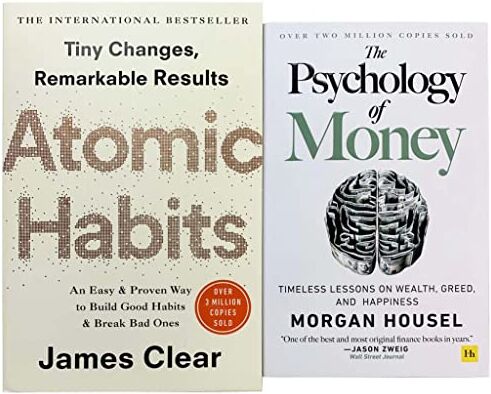
Random House Business/Harriman House ltd Atomic Habits & The Psychology of Money – 2 Books Collection Set Personal Growth, Wealth & Mindset BestsellersAtomic Habits People think that when you want to change your life, you need to think big. But world-renowned habits expert James Clear has discovered another way. He knows that real change comes from the compound effect of hundreds of small decisions: doing two push-ups a day, waking up five minutes early, or holding a single short phone call. He calls them atomic habits. In this ground-breaking book, Clears reveals exactly how these minuscule changes can grow into such life-altering outcomes. He uncovers a handful of simple life hacks (the forgotten art of Habit Stacking, the unexpected power of the Two Minute Rule, or the trick to entering the Goldilocks Zone), and delves into cutting-edge psychology and neuroscience to explain why they matter. Along the way, he tells inspiring stories of Olympic gold medalists, leading CEOs, and distinguished scientists who have used the science of tiny habits to stay productive, motivated, and happy. The Psychology of Money Doing well with money isn't necessarily about what you know. It's about how you behave. And behaviour is hard to teach, even to really smart people. Money investing, personal finance, and business decisions is typically taught as a math-based field, where data and formulas tell us exactly what to do. But in the real world people don't make financial decisions on a spreadsheet. They make them at the dinner table, or in a meeting room, where personal history, your own unique view of the world, ego, pride, marketing, and odd incentives are scrambled together. In The Psychology of Money, award-winning author Morgan Housel shares 19 short stories exploring the strange ways people think about money and teaches you how to make better sense of one of life's most important topics.15,99 £*Shipping: 2,99 £Secure redirect to the provider
-
What are homologous and analogous structures in plants?
Homologous structures in plants are features that have a similar underlying structure and origin, but may have different functions. For example, the wings of a bird and the arms of a human are homologous structures because they both have a similar bone structure, even though they serve different purposes. In plants, homologous structures can include similar leaf or flower structures that have evolved from a common ancestor. Analogous structures in plants, on the other hand, are features that have a similar function but different underlying structures and origins. For example, the wings of a bird and the wings of a butterfly are analogous structures because they both serve the function of flight, but have different anatomical origins. In plants, analogous structures can include similar leaf shapes or reproductive structures that have evolved independently in different plant lineages to serve similar functions. **
-
What is the difference between equivalent and analogous?
The main difference between equivalent and analogous is that equivalent refers to things that are equal in value, function, or meaning, while analogous refers to things that are similar in some way but not necessarily equal in value or function. For example, two equivalent fractions have the same value, while two analogous situations may share similarities but have different outcomes. In summary, equivalent implies equality, while analogous implies similarity. **
-
Are spines and thorns in biology homologous or analogous?
Spines and thorns in biology are considered analogous structures. This means that they have similar functions (protection) but do not share a common evolutionary origin. Spines can be found in a variety of organisms, such as cacti and porcupines, while thorns are typically found in plants like roses and blackberries. Despite their similar functions, spines and thorns evolved independently in different lineages to serve the purpose of defense. **
-
What is the definition of homologous and analogous organs?
Homologous organs are structures that have a similar origin in different species, suggesting a common evolutionary ancestor. These organs may have different functions in different species but share a common underlying structure. On the other hand, analogous organs are structures that have a similar function in different species but do not share a common evolutionary origin. Analogous organs have evolved independently in different species to serve the same purpose. **
* All prices are inclusive of VAT and, if applicable, plus shipping costs. The offer information is based on the details provided by the respective shop and is updated through automated processes. Real-time updates do not occur, so deviations can occur in individual cases. ** Note: Parts of this content were created by AI.